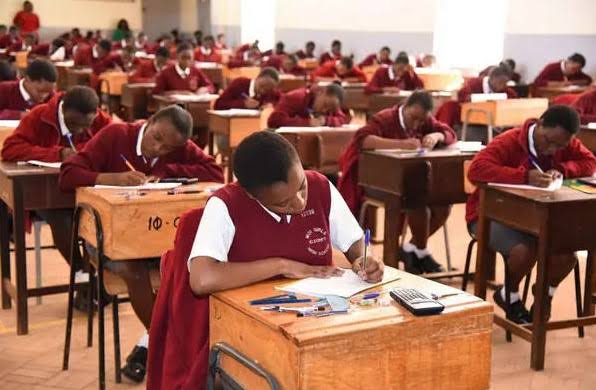
A complete breakdown of the 2025 KCSE results showing how 996,000+ candidates performed. See grade distribution, trends, and implications for university placement.
The release of the 2025 Kenya Certificate of Secondary Education (KCSE) results has provided a detailed snapshot of academic performance across the country. With over 996,000 candidates, the results reflect not only individual achievement but also national education trends during the final phase of the 8-4-4 curriculum.
According to official figures, thousands of candidates attained top grades, while a significant number scored average and lower grades—highlighting both excellence and systemic challenges within Kenya’s secondary education system.
Full 2025 KCSE Grade Distribution
The official grade breakdown for the 2025 KCSE examination is as follows:
- A (Plain): 1,932 candidates
- A- (Minus): 9,336 candidates
- B+ (Plus): 23,990 candidates
- B (Plain): 50,215 candidates
- B- (Minus): 80,681 candidates
- C+ (Plus): 104,561 candidates
- C (Plain): 115,801 candidates
- C- (Minus): 120,615 candidates
- D+ (Plus): 126,915 candidates
- D (Plain): 145,557 candidates
- D- (Minus): 161,724 candidates
- E: 47,798 candidates
This distribution shows that performance was widely spread, with the majority of candidates falling between C- and D- grades.
Top Performers: A to B+ Grades
A total of 35,258 candidates scored B+ and above, making them eligible for direct university admission. Although the number of A plain candidates (1,932) remains relatively low, it reflects the high academic rigor of the KCSE examination.
The A- and B+ categories, which together account for over 33,000 learners, represent strong academic performance and competitiveness for professional degree programs.
Middle Grades: The C Band Majority
The C+, C, and C- categories accounted for over 340,000 candidates, making this the largest performance band in the 2025 KCSE results.
- These candidates are suitable for:
- Diploma programs
- Teacher training colleges
- Technical and vocational education
- Some degree programs (C+ and above)
This highlights the growing importance of TVET institutions and alternative education pathways in Kenya.
Lower Grades and Education Challenges
Over 480,000 candidates scored D+ and below, raising critical questions about:
- Learning outcomes
- School resource disparities
- Teacher distribution
- Curriculum effectiveness
The D- category alone recorded 161,724 candidates, the highest single-grade count, while 47,798 candidates scored grade E.
These figures underline the need for policy reforms, remedial programs, and stronger learner support systems under the Competency-Based Education (CBE) framework.
What the Results Mean for University Placement
- B+ and above: Competitive degree programs
- C+ to C: Limited degree slots, strong diploma options
- C- to D+: TVET and artisan training
- D and below: Skills-based and alternative education routes
The government’s push toward skills development aligns well with this grade distribution.
The Bigger Picture: End of the 8-4-4 System
The 2025 KCSE cohort marks the closing chapter of the 8-4-4 education system, which focused heavily on examinations. These results will shape final placement decisions before Kenya fully transitions to Competency-Based Education, which emphasizes skills, creativity, and learner strengths.
The 2025 KCSE results reveal a balanced mix of excellence, average performance, and academic struggle. While thousands achieved university-qualifying grades, the majority will pursue alternative pathways—signaling a critical shift in how Kenya views success beyond exam scores.

Chipuko is a finance-focused digital platform that provides insightful, high-value content on money, investing, and wealth-building opportunities. It covers topics such as personal finance, banking, credit solutions, and global investment strategies, with a strong focus on helping readers make smarter financial decisions and maximize income potential.
SUPPORT CHIPUKO RESEACH
Paypal: [email protected]
M-Pesa Till: 8293548
CONTACT US
Email: [email protected]
Whatsapp: 254701169398
Telephone: 254701169398