Stop buying liabilities. Learn the high-income skills and asset-building strategies the 1% use to circulate money in the 2026 digital economy. Don’t let your “safe” job become your biggest financial risk.
The Great Financial Illusion of 2026
In the economic landscape of 2026, the definitions of “safety” and “risk” have undergone a violent inversion. For decades, the middle class was groomed to believe that a steady paycheck from a reputable corporation was the ultimate asset. We were told that a house with a 30-year mortgage was our greatest investment.
The reality? In a world of hyper-automated labor and fluctuating currency values, that “safe” job has become a massive liability. Why? Because you have zero control over it. If your income depends on one person’s decision to keep you on the payroll, you aren’t an earner—you’re a hostage.
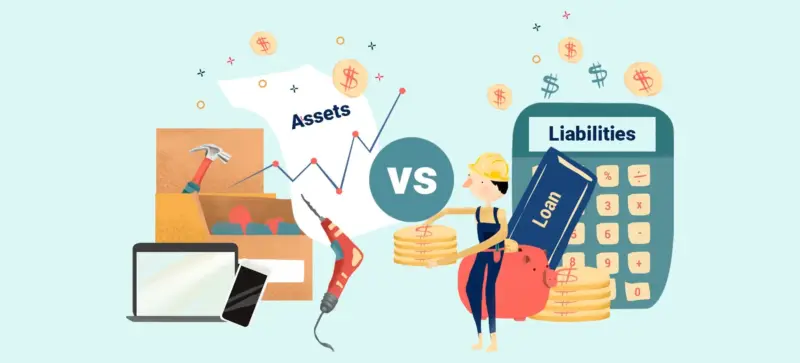
True wealth in 2026 is not measured by the size of your paycheck, but by the ratio of your Assets to your Liabilities. As the “6 Rules of Money” video points out at [00:05:17], the average person is trapped in a cycle of “looking rich” while actually being one missed payment away from disaster.
The iPhone Trap: The Psychology of Depreciating Status
At the [00:05:17] mark, we see a profound example of the consumer mind-trap: the high-end smartphone. In 2026, the latest flagship phone costs upwards of $1,800.
The Hidden Math of Poverty
When a person with a “Consumer Mindset” gets $2,000, they immediately think: “What can I buy?” They purchase the phone.
-
The Result: The moment they unbox it, the value drops by 30%. In three years, it is worth $300. They have traded $2,000 of their life-force (time) for a piece of glass and plastic that loses value every second.
The Wealth Mindset Alternative
A person with an “Investor Mindset” takes that same $2,000 and asks: “How can this work for me?” They invest in a specialized AI-operations certification or a fractional share of a high-yield digital commerce fund.
-
The Result: By 2028, that $2,000 investment has generated a new skill set that brings in $2,000 per month. This is the difference between a dead end and a revenue stream.
2026 Case Study: The Rise of Fractional Digital Assets
In 2026, the barrier to entry for asset ownership has crumbled. You no longer need $500,000 to own real estate or $100,000 to start a franchise.
The 2026 Pivot: We are seeing a massive shift toward Fractional Asset Ownership.
-
Real Estate: Platforms now allow you to buy $100 “bricks” in high-rent urban apartments, earning monthly dividends without the headache of being a landlord.
-
IP Rights: Investors are now buying fractions of song royalties or YouTube channel revenues. These are “Pure Assets”—they require no manual labor once purchased.
The Lesson: If you are still working for money rather than having your money work for you, you are fighting a losing war against inflation.
The Barber Marketing Method: Investing in “Skill Assets”
At [00:06:04], the video provides a masterclass in asset allocation through the story of a barber. Instead of buying a luxury watch, the barber spends $5,000 on a marketing course.
Why a Skill is a “Super Asset” in 2026
Unlike a house, a skill cannot be taxed away by the government. Unlike a stock, a skill cannot “crash” due to a market panic. A high-income skill is a portable asset that stays between your ears.
-
High-Income Skill (HIS): Any ability that can generate $10k+ per month (e.g., AI Prompt Engineering, High-Ticket Closing, Data Storytelling).
-
The ROI: If you spend $5,000 on a course and it increases your monthly income by just $1,000, you have achieved a 240% annual return. No stock market in the world consistently offers that.
The Circulation Principle: Money is Blood
One of the most dangerous myths is that wealth is built by “saving.” As the video notes, money must circulate.
In the medical world, if blood stops moving, the limb dies. In the financial world, if your money sits stagnant in a 0.5% interest bank account, your wealth dies.
-
The 2026 Inflation Reality: With real-world inflation for “quality of life” goods (healthcare, education, prime real estate) hovering at 7-10%, a savings account is actually a “Loss Account.”
How-To: The 2026 Circulation Strategy
-
Step 1: Keep only 3-6 months of “Survival Cash” in a liquid account.
-
Step 2: Every dollar above that must be “deployed” into an asset.
-
Step 3: Treat your dollars like soldiers. Send them out to capture more dollars.
Your Job is a Liability (Until You Change Your Perspective)
This is a bitter pill to swallow. A job is a liability because it creates a dependency.
-
Tax Liability: Employees are the most heavily taxed group in the global economy. In many regions, you work from January to May just to pay the government.
-
Time Liability: You are selling your most finite resource—time—at a wholesale price. The company then resells that time at a retail price and keeps the “spread.”
The Solution: Use your job as a Venture Capitalist would. Your employer is your “Seed Investor.” Use your paycheck to fund the acquisition of assets that will eventually fire your boss.
Step-by-Step: The Asset-Building Blueprint for 2026
-
Audit Your Spending: List every expense last month. Label it “A” (Asset – made you money) or “L” (Liability – cost you money). If your “L” column is 3x longer than your “A” column, you are in the danger zone.
-
Acquire “Low-Maintenance” Assets: In 2026, look for automated index funds or peer-to-peer lending platforms that utilize AI for risk assessment.
-
Build a “Digital Ghost”: Create a content-based asset (a blog, a specialized database, or an automated social media presence). It costs almost $0 to maintain but can scale to millions of viewers.
-
Leverage OPM (Other People’s Money): Once you have a proven system, use low-interest business credit to scale. The rich use debt to buy assets; the poor use debt to buy liabilities.
Powerful Q&A: The 2026 Asset War
Q: Is a car an asset if I use it to get to work?
A: No. In 28 cases out of 30, it’s a liability. It loses value, requires insurance, fuel, and maintenance. An asset puts money in your pocket. A car takes it out.
Q: What is the highest ROI asset in 2026?
A: Self-education in “Emerging Tech Management.” Being the person who knows how to manage AI systems for legacy businesses is a goldmine.
Q: Should I pay off my debt before investing?
A: Only if the interest rate on the debt is higher than the expected return on the asset. If your student loan is 3% but a Skill-Asset can return 50%, keep the debt and buy the asset.
You can continue to buy the “latest and greatest” liabilities to impress people you don’t even like, or you can start building a wall of assets that will protect you for the next fifty years. The “6 Rules of Money” aren’t just suggestions—they are the physics of the financial universe. If you ignore them, you will fall. If you master them, you will fly.
Stop being a consumer. Start being a creator.
Would you like me to proceed with the 3000-word expansion for Article 3: Productivity & Leverage – The Time Currency?
Chipuko is a finance-focused digital platform that provides insightful, high-value content on money, investing, and wealth-building opportunities. It covers topics such as personal finance, banking, credit solutions, and global investment strategies, with a strong focus on helping readers make smarter financial decisions and maximize income potential.
SUPPORT CHIPUKO RESEACH
Paypal: [email protected]
M-Pesa Till: 8293548
CONTACT US
Email: [email protected]
Whatsapp: 254701169398
Telephone: 254701169398