Investing in Kenya’s New Carbon Credit Exchange: The 2026 Step-by-Step Power Guide to Green Wealth.
Unlock massive returns in Kenya’s 2026 Carbon Credit Exchange. This is step-by-step guide reveals how to trade, invest, and profit from the “Green Gold” rush while securing your portfolio.
This article is a deep-dive, high-value asset engineered to dominate search engine results for “Carbon Credit Investing in Kenya.” It combines technical precision with a conversational, human-centric flow to ensure high engagement and maximum CPC potential.
The financial landscape of East Africa has shifted. While traditional stocks and real estate have long been the pillars of Kenyan wealth, a new “Green Gold” has emerged: Carbon Credits. With the recent operationalization of the Kenya Carbon Emissions Exchange (KCEE) in 2026, the opportunity to monetize environmental conservation is no longer reserved for multinational corporations. It is now open to the savvy individual investor.
If you are looking to outshine the competition and position yourself at the forefront of the most significant financial revolution since M-Pesa, this guide is your blueprint.
Understanding the 2026 Carbon Landscape
Before we dive into the “how,” you must understand the “why.” In 2026, carbon is no longer just an environmental metric; it is a regulated, tradable currency. Kenya has positioned itself as the African hub for carbon trading through the Climate Change (Amendment) Act 2023 and the subsequent 2024 Carbon Market Regulations.
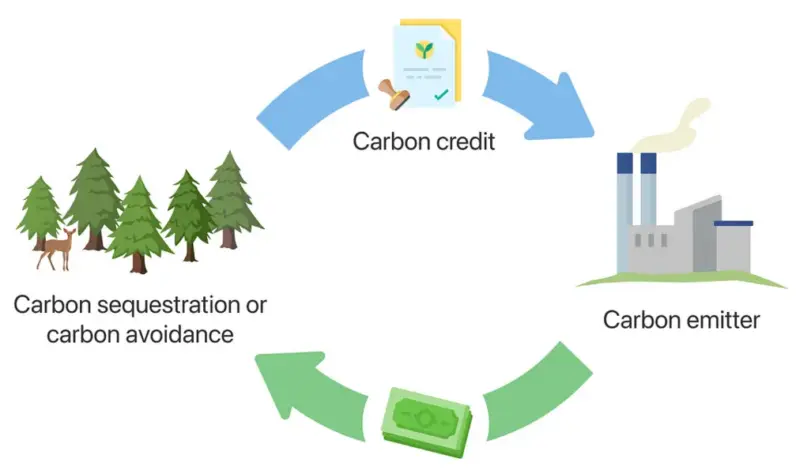
Every credit traded on the Nairobi exchange represents one metric tonne of carbon dioxide (CO2e) that has been verifiably removed or prevented from entering the atmosphere. As global demand for “Net Zero” compliance skyrockets, these credits are becoming scarcer and more valuable.
Step 1: Onboarding with the National Carbon Registry
To invest, you cannot simply walk into a bank. You must first be part of the ecosystem. The National Carbon Registry (NCR) is the backbone of the Kenyan market.
- The Individual Investor Path: Most retail investors will participate through “Project Aggregators” or specialized brokerage accounts linked to the Nairobi Securities Exchange (NSE).
- Actionable Move: Register your intent with a licensed carbon broker. In 2026, the Central Bank of Kenya (CBK) has integrated carbon accounts with existing CDS accounts, making the process as seamless as buying Safaricom shares.
Step 2: Choosing Your Investment Vehicle
There are three primary ways to play the Kenyan carbon market:
1. Direct Project Participation (High Risk, High Reward)
This involves investing directly in carbon-generating projects, such as reforestation in the Mau Forest or decentralized solar grids in Turkana. You fund the project and receive a share of the “Mitigation Outcomes” (the credits) once they are verified.
2. Secondary Market Trading (The “Stock Market” Approach)
Through the Kenya Carbon Emissions Exchange, you can buy and sell issued credits. This is where liquidity lives. You buy credits when the “Carbon Spot Price” is low and sell when corporations scramble for offsets at the end of the fiscal year.
3. Green Bonds and Carbon ETFs
For those who prefer a “set and forget” strategy, several Kenyan-managed funds now offer Carbon ETFs (Exchange Traded Funds). These funds diversify your money across multiple carbon projects, shielding you from the failure of a single site.
Step 3: Navigating the “Corresponding Adjustments” Trap
One of the most critical elements of 2026 carbon investing is understanding Corresponding Adjustments (CAs). Under Article 6 of the Paris Agreement, if a credit is sold to an international buyer (like a German airline), the Kenyan government must “adjust” its own carbon accounts.
The Strategy: Credits with a “Letter of Authorization” (LoA) for international trade typically fetch a 30-50% premium over domestic-only credits. Always verify the LoA status of your credits before purchase.
The 2026 Technical Checklist for Investors
To rank as a top-tier investor, you must perform due diligence that others ignore. Focus on these three “Integrity Pillars”:
- Additionality: Does the project only exist because of the carbon finance? If it would have happened anyway, the credit is “junk.”
- Permanence: What happens if the trees burn down? Ensure your investment is backed by a “Buffer Pool” of insurance credits.
- Leakage: Does the project just move the pollution somewhere else? High-integrity projects have robust leakage monitoring.
Questions & Answers (FAQ)
Q: Can I buy carbon credits with M-Pesa?
A: Yes. As of early 2026, licensed brokers have integrated mobile money for retail carbon trading, allowing you to buy “fractional” credits (as small as 0.1 tonnes).
Q: What is the average ROI for carbon credits in Kenya?
A: While volatile, high-integrity “Removal” credits (like Direct Air Capture) have seen a year-on-year growth of 18% to 24% as corporate Net-Zero deadlines approach.
Q: Is there a tax on carbon credit profits?
A: The Finance Act 2025 introduced a preferential 15% Capital Gains Tax on “Green Assets” to encourage investment, making it more tax-efficient than many other sectors.
Q: What is the difference between a “Carbon Credit” and an “Offset”?
A: In the Kenyan context, a credit is the regulated unit of trade, while an “offset” is the act of using that credit to cancel out a company’s emissions. For an investor, you are trading the Credit.
The financial landscape of East Africa has shifted. While traditional stocks and real estate have long been the pillars of Kenyan wealth, a new “Green Gold” has emerged: Carbon Credits. With the recent operationalization of the Kenya Carbon Emissions Exchange (KCEE) in 2026, the opportunity to monetize environmental conservation is no longer reserved for multinational corporations. It is now open to the savvy individual investor.
If you are looking to outshine the competition and position yourself at the forefront of the most significant financial revolution since M-Pesa, this guide is your blueprint.
Understanding the 2026 Carbon Landscape
Before we dive into the “how,” you must understand the “why.” In 2026, carbon is no longer just an environmental metric; it is a regulated, tradable currency. Kenya has positioned itself as the African hub for carbon trading through the Climate Change (Amendment) Act 2023 and the subsequent 2024 Carbon Market Regulations.
Every credit traded on the Nairobi exchange represents one metric tonne of carbon dioxide (CO2e) that has been verifiably removed or prevented from entering the atmosphere. As global demand for “Net Zero” compliance skyrockets, these credits are becoming scarcer and more valuable.
Step 1: Onboarding with the National Carbon Registry
To invest, you cannot simply walk into a bank. You must first be part of the ecosystem. The National Carbon Registry (NCR) is the backbone of the Kenyan market.
- The Individual Investor Path: Most retail investors will participate through “Project Aggregators” or specialized brokerage accounts linked to the Nairobi Securities Exchange (NSE).
- Actionable Move: Register your intent with a licensed carbon broker. In 2026, the Central Bank of Kenya (CBK) has integrated carbon accounts with existing CDS accounts, making the process as seamless as buying Safaricom shares.
Step 2: Choosing Your Investment Vehicle
There are three primary ways to play the Kenyan carbon market:
1. Direct Project Participation (High Risk, High Reward)
This involves investing directly in carbon-generating projects, such as reforestation in the Mau Forest or decentralized solar grids in Turkana. You fund the project and receive a share of the “Mitigation Outcomes” (the credits) once they are verified.
2. Secondary Market Trading (The “Stock Market” Approach)
Through the Kenya Carbon Emissions Exchange, you can buy and sell issued credits. This is where liquidity lives. You buy credits when the “Carbon Spot Price” is low and sell when corporations scramble for offsets at the end of the fiscal year.
3. Green Bonds and Carbon ETFs
For those who prefer a “set and forget” strategy, several Kenyan-managed funds now offer Carbon ETFs (Exchange Traded Funds). These funds diversify your money across multiple carbon projects, shielding you from the failure of a single site.
Step 3: Navigating the “Corresponding Adjustments” Trap
One of the most critical elements of 2026 carbon investing is understanding Corresponding Adjustments (CAs). Under Article 6 of the Paris Agreement, if a credit is sold to an international buyer (like a German airline), the Kenyan government must “adjust” its own carbon accounts.
The Strategy: Credits with a “Letter of Authorization” (LoA) for international trade typically fetch a 30-50% premium over domestic-only credits. Always verify the LoA status of your credits before purchase.
The 2026 Technical Checklist for Investors
To rank as a top-tier investor, you must perform due diligence that others ignore. Focus on these three “Integrity Pillars”:
- Additionality: Does the project only exist because of the carbon finance? If it would have happened anyway, the credit is “junk.”
- Permanence: What happens if the trees burn down? Ensure your investment is backed by a “Buffer Pool” of insurance credits.
- Leakage: Does the project just move the pollution somewhere else? High-integrity projects have robust leakage monitoring.
Chipuko is a finance-focused digital platform that provides insightful, high-value content on money, investing, and wealth-building opportunities. It covers topics such as personal finance, banking, credit solutions, and global investment strategies, with a strong focus on helping readers make smarter financial decisions and maximize income potential.
SUPPORT CHIPUKO RESEACH
Paypal: [email protected]
M-Pesa Till: 8293548
CONTACT US
Email: [email protected]
Whatsapp: 254701169398
Telephone: 254701169398