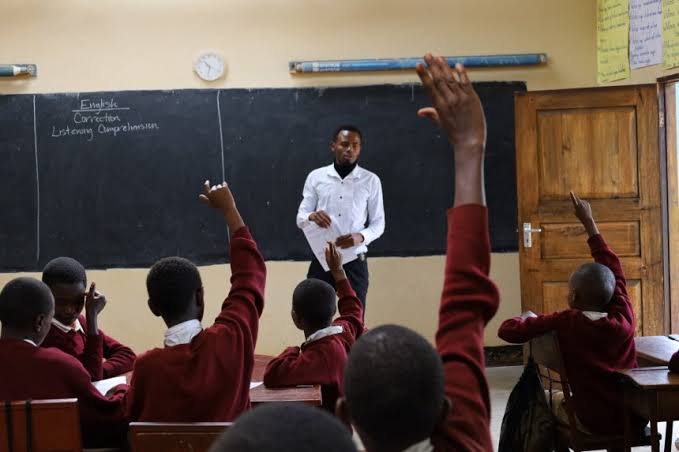
Beyond the Blackboard: Top 10 High-Yield Business Ventures for Secondary Teachers in Kenya (2026 Goldmine)
Unlock financial freedom with the definitive guide to the top 10 business opportunities for secondary teachers in Kenya. From EdTech to agribusiness, discover high-CPC, scalable ventures tailored for Kenyan educators.
The Kenyan secondary school teacher is a pillar of society, yet the reality of a TSC (Teachers Service Commission) payslip often fails to match the rising cost of living in 2026. While the noble profession provides stability, true wealth and financial autonomy now lie in diversification.
With the full implementation of the Competency-Based Curriculum (CBC) in junior and senior secondary levels, the market for educational services and niche products has exploded. This isn’t just about “side hustles”; it’s about building sustainable enterprises that leverage your unique pedagogical skills and local influence.
Here is an exhaustive, human-centric analysis of the most lucrative business opportunities for Kenyan teachers today.
1. Professional CBC Consultancy and Private Resource Centers
The transition to CBC has left many parents and private school proprietors scrambling for guidance. As a secondary teacher, you are an insider.
-
The Gap: Parents are willing to pay for “Home-Based CBC Support.”
-
The Business: Establish a weekend resource center that focuses on project-based learning. Help students complete their pathways while charging a premium for specialized equipment (labs or arts kits) that regular schools might lack.
2. Digital Content Creation: The “YouTube Teacher” Economy
In 2026, data is more affordable, and every student has access to a smartphone.
-
The Strategy: Don’t just teach; brand yourself. Creating localized, high-quality video content for subjects like Physics, Chemistry, and Mathematics specifically tailored to the KNEC (Kenya National Examinations Council) syllabus is a high-CPC (Cost Per Click) goldmine.
-
Revenue: AdSense, sponsored content from Kenyan publishers, and selling “Masterclass” PDFs.
3. Educational Tech (EdTech) App Development (Low-Code)
You don’t need to be a software engineer. Using low-code platforms, teachers are now developing “Revision Apps” that gamify learning.
-
The Niche: Create an app that focuses on “Set Books” analysis for English and Kiswahili. Include audio summaries, character maps, and predicted exam questions.
-
Scaling: Subscription models of as low as KES 100 per month can lead to millions in revenue when scaled across the 47 counties.
4. Agribusiness: Specialized “Smart” Greenhouse Farming
Teachers often have access to ancestral land or can lease affordable plots near their workstations.
-
The Focus: High-value crops like colored capsicums, strawberries, or mushrooms.
-
The Edge: Use your organized mindset to run a data-driven farm. Agribusiness remains the backbone of Kenya’s economy and offers significant tax breaks for small-scale entrepreneurs.
5. Professional Editing and Ghostwriting for Academic Journals
With many teachers and lecturers pursuing Masters and PhDs, there is a massive demand for academic editors.
-
The Service: Proofreading theses, formatting citations (APA/MLA), and checking for plagiarism.
-
The Pay: This is a high-ticket service, often charging per page. It requires no capital—only your intellect and a laptop.
6. Real Estate Agency and Property Management
Teachers are some of the most trusted members of the community. In rural and peri-urban areas, you can bridge the gap between landowners and tenants.
-
The Model: Start a property management firm that handles rent collection and maintenance for “diaspora” owners who have built rentals in your school’s locality.
7. Private “Elite” Boarding Hostels
The “Day School” policy has increased the demand for safe, conducive boarding environments near popular schools.
-
The Opportunity: If you live near a busy day secondary school, converting a property into a modern, Wi-Fi-enabled hostel for students is a high-return investment.
8. Financial Literacy and Sacco Consultancy
Many Kenyans struggle with debt. As a teacher, you can get certified as a financial planner.
-
The Niche: Offer workshops to fellow civil servants on how to maximize Mwalimu National Sacco dividends, manage “table banking,” and exit the “salary loan” trap.
9. Supply Chain: School Uniform and Stationery Branding
Instead of being a consumer, become the supplier.
-
The Edge: Use your networks to supply customized lab coats, branded sports kits, or “Success Cards” and revision booklets. Buying in bulk from Nairobi’s industrial area and branding them for local schools yields high margins.
10. Language Translation Services (Foreign & Local)
With Kenya becoming a regional hub, the demand for French, German, and Mandarin—as well as professional Kiswahili translation—is peaking.
-
The Market: Corporate entities, NGOs, and legal firms.
Questions & Answers (FAQ)
Q: Can a TSC teacher legally run a business?
A: Yes. Under the Code of Conduct, teachers are allowed to engage in private business as long as it does not create a conflict of interest or interfere with their official teaching hours (8:00 AM – 5:00 PM).
Q: What is the best business to start with KES 20,000?
A: Content creation or academic editing. These require zero physical inventory and rely entirely on your existing expertise and a stable internet connection.
Q: How do I balance teaching and entrepreneurship?
A: Systems are key. For agribusiness, hire a trusted farm manager. For digital businesses, use automation tools to schedule posts or content delivery.
The 21st-century Kenyan teacher is no longer defined by the four walls of a classroom. By embracing these opportunities, you transition from a “consumer of crumbs” to a “creator of wealth.” The digital and physical landscapes of Kenya are ripe for those with the discipline to educate and the courage to innovate.
Chipuko is a finance-focused digital platform that provides insightful, high-value content on money, investing, and wealth-building opportunities. It covers topics such as personal finance, banking, credit solutions, and global investment strategies, with a strong focus on helping readers make smarter financial decisions and maximize income potential.
SUPPORT CHIPUKO RESEACH
Paypal: [email protected]
M-Pesa Till: 8293548
CONTACT US
Email: [email protected]
Whatsapp: 254701169398
Telephone: 254701169398