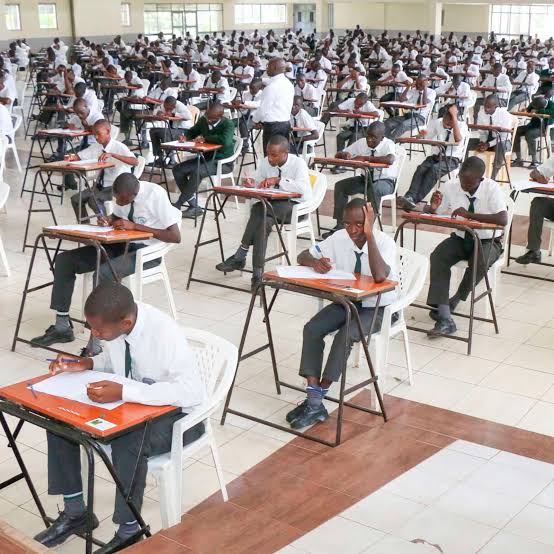
An in-depth look at the 2025 KCSE results, including full grade statistics, performance patterns, and implications for students, parents, and policymakers.
The 2025 KCSE examination results have officially revealed how nearly one million Kenyan students performed in the final KCSE sitting under the 8-4-4 education system. Beyond individual scores, the grade distribution provides critical insights into learning outcomes, access to higher education, and the future direction of Kenya’s education sector.
Overview of the 2025 KCSE Performance
The grade distribution shows a pyramid-shaped performance trend, with fewer candidates at the top and a steadily increasing number toward the lower grades.
Only 1,932 candidates attained the coveted A plain, while performance peaked in the D- category, which recorded 161,724 candidates.
University Qualification Statistics
University qualification in Kenya begins at C+ and above. Based on the results:
- A to B-: 166,154 candidates
- C+ only: 104,561 candidates
This brings the total number of degree-eligible candidates to over 270,000, placing pressure on public universities while expanding opportunities for private institutions.
Growth of Alternative Education Pathways
The large number of candidates scoring C-, D+, D, and D- confirms the increasing relevance of:
- Technical and Vocational Education and Training (TVET)
- Artisan certification programs
- Skills-based training under national polytechnics
The 47,798 candidates who scored grade E will also benefit from structured re-entry and vocational programs.
Performance Trends and Key Observations
Several trends emerge from the 2025 KCSE results:
- Top grades remain highly competitive, maintaining exam credibility
- Middle grades dominate, reflecting average national performance
- Lower grades remain high, emphasizing the need for inclusive education reforms
These trends reinforce the rationale behind Kenya’s transition to Competency-Based Education.
Implications for Parents and Schools
Parents and schools must now focus on:
- Career guidance based on strengths
- Skills-based pathways, not just degrees
- Early learner support to reduce dropout risks
The KCSE results show that success is no longer one-dimensional.
Policy Lessons from the 2025 KCSE Results
For policymakers, the results highlight:
- The importance of teacher training
- Infrastructure investment in rural schools
- Strengthening remedial and transition programs
These insights will inform reforms under the CBE framework.
The 2025 KCSE grade distribution tells a powerful story of ambition, challenge, and transition. As Kenya moves beyond the 8-4-4 system, these results will serve as a benchmark for evaluating the success of future education reforms and learner-centered assessment.
Chipuko is a finance-focused digital platform that provides insightful, high-value content on money, investing, and wealth-building opportunities. It covers topics such as personal finance, banking, credit solutions, and global investment strategies, with a strong focus on helping readers make smarter financial decisions and maximize income potential.
SUPPORT CHIPUKO RESEACH
Paypal: [email protected]
M-Pesa Till: 8293548
CONTACT US
Email: [email protected]
Whatsapp: 254701169398
Telephone: 254701169398